Affiliate links: we may earn a commission if you buy through the order links on this page, at no extra cost to you. Full disclosure.
What is the best urinary tract supplement for women?
Cranberry is the urinary tract supplement with the strongest research behind it. A 2023 Cochrane review of 50 studies found that cranberry products lowered the risk of urinary tract infections (UTIs) by about 26% in women who get them again and again, and the 2025 U.S. urology guideline says doctors should offer it. No supplement treats an active infection.
Around and after menopause, the option with the clearest evidence is a prescription: vaginal estrogen.
Urinary tract supplements for women, at a glance
| Question | Short answer |
|---|---|
| Which supplement has the best evidence? | Cranberry, in a 2023 Cochrane review of 50 studies. |
| Does D-mannose work? | It did no better than a placebo in the largest trial (2024). |
| Do probiotics prevent UTIs? | Possibly. Vaginal forms show the clearest results so far. |
| Does vitamin C help? | Only one small trial, in pregnant women. |
| What helps most after menopause? | Vaginal estrogen, by prescription, per the U.S. guideline. |
| Can a supplement treat a UTI? | No. Symptoms of an infection need a doctor. |
What supplements should I take to prevent a UTI?
If you want a supplement, cranberry is the one with the most support, followed at a distance by probiotics, while D-mannose and vitamin C have the weakest evidence for adult women. That order is based on the published trials and the 2025 guideline from the American Urological Association (AUA), which graded how confident it could be in each recommendation.
| Option | What the research shows | What the 2025 U.S. guideline says |
|---|---|---|
| Cranberry (capsules, tablets, juice) | 26% lower risk of UTI in women with repeat infections (Cochrane, 2023) | Doctors should offer it |
| Probiotics (Lactobacillus) | Mixed; the clearest results came from vaginal forms | Not enough good data yet to recommend one sold in the U.S. |
| D-mannose | No better than a placebo in a 598-woman trial (2024) | On its own, it may not be effective |
| Vitamin C | One small trial, in pregnant women (2007) | Not among the guideline's options |
| Vaginal estrogen (prescription) | 0.5 vs 5.9 infections a year in a 1993 trial | Doctors should recommend it around and after menopause |
| Methenamine hippurate (prescription) | Close to daily antibiotics in a 2022 trial | Doctors may offer it |
| More water | Fewer infections when women who drank under 1.5 liters a day drank more | Doctors may offer it |
The 2025 update revised the cranberry advice, added methenamine hippurate and water, and gave D-mannose its own caution. You can read the AUA guideline on recurrent UTIs in women on the association's website.
What is the most effective cranberry supplement?
The most useful cranberry supplement is one that states how many proanthocyanidins (PACs) it contains, because PACs are the compounds studied for keeping bacteria from sticking to the bladder wall. In the 2023 Cochrane review, cranberry juices, tablets and capsules lowered UTI risk by about 26% in women with repeat infections, across eight studies of 1,555 women.
The right dose is less settled. The AUA guideline notes that most clinicians would consider a supplement standardized to at least 36 mg of PACs a good option, and a 2024 analysis of 10 trials found a benefit at 36 mg or more a day. Yet the Cochrane review found no difference between low, moderate and high PAC doses, and a 2021 trial comparing 37 mg with 2 mg a day found a 24% drop in infections that wasn't statistically significant. A label that lists PACs in milligrams at least tells you what you're getting; "500 mg of cranberry" doesn't.
Cranberry taken by mouth is generally thought to be safe, according to the NIH's National Center for Complementary and Integrative Health (NCCIH). If you're weighing it against D-mannose, our D-mannose vs cranberry guide also covers juice versus pills.
Is D-mannose better than cranberry?
No, based on the best evidence so far. In a 2024 trial of 598 women with repeat UTIs, published in JAMA Internal Medicine, 51% of those taking 2 grams of D-mannose a day had a UTI within six months, compared with 55.7% of those on a placebo. That difference was small enough to be due to chance.
The authors concluded that D-mannose should not be recommended for prevention in this group, and the 2025 AUA guideline now tells doctors to let women know that D-mannose alone may not be effective. A 2022 Cochrane review, written before that trial, had found too little evidence to support it or rule it out. Many products pair D-mannose with cranberry, which is the part with stronger evidence; our look at UroFresh, a cranberry and D-mannose formula, goes through one of them dose by dose.
What is the best probiotic for UTIs in women?
The most studied probiotics for UTIs are Lactobacillus species, especially L. crispatus, L. rhamnosus and L. reuteri. The clearest results came from vaginal forms: in a 2024 trial of 174 premenopausal women in India, 31.8% of those using oral plus vaginal probiotics had a UTI within four months, against 70.4% on a placebo.
Probiotics you swallow have more mixed results. In a 2012 trial of 252 postmenopausal women, capsules with L. rhamnosus GR-1 and L. reuteri RC-14 led to 3.3 infections a year, a little more than the 2.9 seen with a daily antibiotic. They didn't quite match the antibiotic, but unlike it, they didn't increase antibiotic resistance. A 2015 Cochrane review of nine studies found no significant benefit overall, while noting that one couldn't be ruled out.
For now, the AUA says there isn't enough good-quality data to recommend a probiotic that is sold in the U.S.; the vaginal product in the 2024 trial is sold in India. If you'd like to try one, look for the species, ideally the exact strain codes, and the amount in colony-forming units (CFU) on the label. Probiotics have a long history of apparently safe use in healthy people, though the NCCIH notes the risk of harm is greater for people with a severe illness or a weakened immune system. Our UroVita Care Flora Guard review reads such a label line by line.
What vitamins should I take to prevent a UTI?
No vitamin has strong evidence for preventing UTIs in adult women. Vitamin C is the one most often suggested, but its main trial was small and done in pregnant women: 12.7% of those taking 100 mg a day had a UTI during the study, compared with 29.1% without it. We found no randomized trial in women over 40.
The AUA guideline doesn't recommend vitamin C for UTI prevention, and it advises against taking vitamin C together with methenamine hippurate, a prescription option covered below. If you're thinking of adding any vitamin, your doctor or pharmacist can check how it fits with what you already take.
How do you prevent UTIs after menopause?
For women in perimenopause or after menopause, the option with the strongest guideline support is vaginal estrogen, a low-dose prescription used inside the vagina. The 2025 AUA guideline says doctors should recommend it unless there is a reason not to, and in a 1993 trial of 93 postmenopausal women, those using it had 0.5 infections a year instead of 5.9.
Estrogen taken as a pill hasn't been shown to reduce UTIs, so the local form is the one that counts here. Other options to discuss with your doctor include:
- Methenamine hippurate, a prescription medicine. In a 2022 trial of 240 women, it came close to daily antibiotics (1.38 against 0.89 infections a year), within the margin the researchers had set in advance.
- More water, if you drink less than about 1.5 liters (50 ounces) a day. The guideline bases this on one trial of 140 women.
- Low-dose antibiotics, which your doctor may weigh against the risk of antibiotic resistance.
Urinary tract infections that kept coming back are something I know firsthand, so I understand the wish for one simple daily fix. My experience isn't evidence, though, and a doctor can look at what's behind repeat infections. If urgency or leaks are part of your picture too, bladder training and pelvic floor exercises for women over 50 are worth a look; neither treats an infection.
See a doctor if you notice…
Burning when you pee, a strong and frequent urge to go, or cloudy or bloody urine. Go the same day if you also have a fever, chills or pain in your back or side, which can mean the infection has reached a kidney.
How do you choose a urinary tract supplement?
Start with an ingredient that has evidence behind it, then check that the label tells you exactly how much of it you're getting. Supplements aren't approved by the U.S. Food and Drug Administration for safety or effectiveness before they're sold, so the label, the research on each ingredient and the seller's terms are what you have to go on.
| Ingredient | What was used in studies | What to look for on the label |
|---|---|---|
| Cranberry | Juices, tablets and capsules; 36 mg of PACs or more a day is the amount many clinicians suggest | PACs in milligrams, not only "cranberry extract" or "juice powder" |
| Probiotics | L. rhamnosus GR-1 and L. reuteri RC-14 by mouth (2012); an oral and vaginal Lactobacillus product sold in India (2024) | Species, strain codes if possible, and CFU per serving |
| D-mannose | 2 grams a day in the 2024 trial, with no benefit over placebo | Grams per serving; best seen as an add-on, not the main ingredient |
| Vitamin C | 100 mg a day, in pregnant women only | Little reason to choose a product for its vitamin C |
Claims should stay at "supports" or "helps maintain"; a product that promises to treat or cure a UTI is promising more than any supplement can. A clear refund window helps too.
Urinary tract supplements we've reviewed
So far we have reviewed two, and each is built on a different ingredient from this comparison: UroFresh combines cranberry with D-mannose, and UroVita Care Flora Guard is a daily probiotic with five Lactobacillus species. Both scored 4.1 out of 5 in our research-based reviews, which weigh the label, the published studies, the price and the guarantee.
UroFresh by Simple Promise
4.1 / 5 · A good option for everyday support
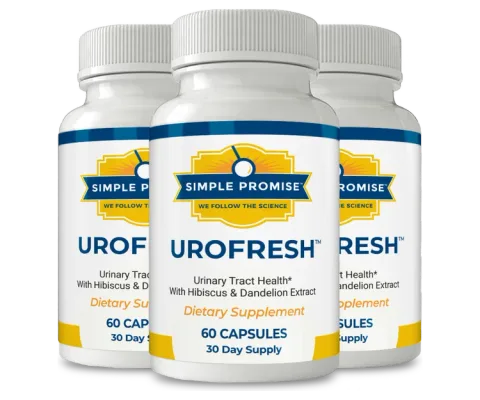
- What it is: a daily capsule with 1,000 mg of D-mannose, 150 mg of cranberry juice powder, and hibiscus and dandelion extracts, every dose listed on the label.
- From this comparison: it includes cranberry, the best-supported ingredient. The label lists the cranberry by weight, not its PAC amount, and D-mannose on its own didn't beat a placebo in the 2024 trial.
- Price on the official site (checked October 28, 2026): from $33 a bottle with the 6-bottle package, free US shipping, one-time purchase and a 365-day money-back guarantee.
Affiliate link: we may earn a commission if you buy, at no extra cost to you.
UroVita Care Flora Guard
4.1 / 5 · Recommended for simple daily support
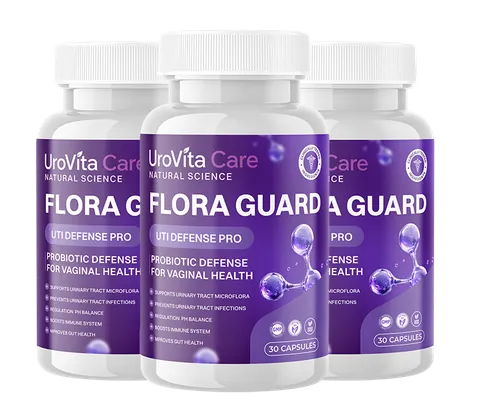
- What it is: a once-a-day women's probiotic with five Lactobacillus species and about 20 billion CFU per capsule.
- From this comparison: it contains L. rhamnosus and L. reuteri, the two species tested in the 2012 trial in postmenopausal women. The label lists the species, not the strain codes used in that trial.
- Price on the official site (checked October 28, 2026): from $35.97 a bottle with the 5-bottle package, free US shipping, one-time packages and a 30-day money-back guarantee.
Affiliate link: we may earn a commission if you buy, at no extra cost to you. Ships to US addresses.
Neither product replaces the options in the guideline above, and neither treats an infection. If your UTIs keep coming back, a supplement can sit alongside your doctor's plan, not in place of it.
Keep reading
- D-Mannose vs Cranberry for UTI: What the Research Shows
- Bladder Training Exercises for Women: How to Retrain Your Bladder
- Why Do I Pee So Much at Night? Causes in Women and What Helps
- Pelvic Floor Exercises for Women Over 50: A Complete Guide
- How to Do Kegels Correctly for Women: A Step-by-Step Guide
Frequently asked questions
Do UTI prevention pills work?
Some can help, depending on the ingredient. Cranberry products lowered the risk of urinary tract infections by about 26% in women with repeat infections, according to a 2023 Cochrane review of 50 studies. D-mannose did no better than a placebo in a 2024 trial of 598 women. Prevention pills don't treat an infection you already have.
Can probiotics prevent UTIs in women?
Possibly, but the evidence is still mixed. A 2024 trial found far fewer infections with vaginal probiotics, while a 2015 Cochrane review of nine studies found no significant benefit and said one couldn't be ruled out. The 2025 U.S. urology guideline says there isn't yet enough good data to recommend a probiotic sold in the U.S.
Who should not take cranberry pills?
Ask your doctor first if you take warfarin, a blood thinner, because studies on an interaction between cranberry and warfarin have been conflicting. The 2023 Cochrane review also found no clear benefit for pregnant women, older adults living in care homes or people who can't fully empty their bladder, so cranberry may not be the right tool there.
Can a supplement treat a UTI?
No. Cranberry, D-mannose and probiotics are studied for preventing infections, not for clearing one you already have. If you have burning when you pee, a strong and frequent urge to go, or cloudy or bloody urine, see a doctor. Go the same day if you also have a fever, chills or pain in your back or side.
Are urinary tract supplements FDA approved?
No. Under U.S. law, the Food and Drug Administration (FDA) does not approve dietary supplements for safety or effectiveness before they are sold, so labels and claims aren't reviewed in advance. That is why it helps to check the research on the ingredient, the exact amounts on the label and the seller's refund terms before you buy.
Sources
- Anger J, Lee U, Ackerman AL, et al. Recurrent Uncomplicated Urinary Tract Infections in Women: AUA/CUA/SUFU Guideline. American Urological Association. Published 2019, validity confirmed 2022, amended 2025. Checked October 28, 2026.
- Ackerman AL, Bradley M, D'Anci KE, et al. Updates to Recurrent Uncomplicated Urinary Tract Infections in Women: AUA/CUA/SUFU Guideline (2025). Journal of Urology. 2026;215(1):3-12. doi:10.1097/JU.0000000000004723. PMID 40905426.
- Williams G, Stothart CI, Hahn D, Stephens JH, Craig JC, Hodson EM. Cranberries for preventing urinary tract infections. Cochrane Database of Systematic Reviews. 2023;11:CD001321. doi:10.1002/14651858.CD001321.pub7. PMID 37947276.
- Xiong Z, Gao Y, Yuan C, et al. Preventive effect of cranberries with high dose of proanthocyanidins on urinary tract infections: a meta-analysis and systematic review. Frontiers in Nutrition. 2024;11:1422121. doi:10.3389/fnut.2024.1422121. PMID 39668896.
- Babar A, Moore L, Leblanc V, et al. High dose versus low dose standardized cranberry proanthocyanidin extract for the prevention of recurrent urinary tract infection in healthy women: a double-blind randomized controlled trial. BMC Urology. 2021;21(1):44. doi:10.1186/s12894-021-00811-w. PMID 33757474.
- Hayward G, Mort S, Hay AD, et al. d-Mannose for Prevention of Recurrent Urinary Tract Infection Among Women: A Randomized Clinical Trial. JAMA Internal Medicine. 2024;184(6):619-628. doi:10.1001/jamainternmed.2024.0264. PMID 38587819.
- Cooper TE, Teng C, Howell M, Teixeira-Pinto A, Jaure A, Wong G. D-mannose for preventing and treating urinary tract infections. Cochrane Database of Systematic Reviews. 2022;8:CD013608. doi:10.1002/14651858.CD013608.pub2. PMID 36041061.
- Gupta V, Mastromarino P, Garg R. Effectiveness of Prophylactic Oral and/or Vaginal Probiotic Supplementation in the Prevention of Recurrent Urinary Tract Infections: A Randomized, Double-Blind, Placebo-Controlled Trial. Clinical Infectious Diseases. 2024;78(5):1154-1161. doi:10.1093/cid/ciad766. PMID 38084984.
- Beerepoot MA, ter Riet G, Nys S, et al. Lactobacilli vs antibiotics to prevent urinary tract infections: a randomized, double-blind, noninferiority trial in postmenopausal women. Archives of Internal Medicine. 2012;172(9):704-712. PMID 22782199.
- Schwenger EM, Tejani AM, Loewen PS. Probiotics for preventing urinary tract infections in adults and children. Cochrane Database of Systematic Reviews. 2015;(12):CD008772. doi:10.1002/14651858.CD008772.pub2. PMID 26695595.
- Ochoa-Brust GJ, Fernández AR, Villanueva-Ruiz GJ, et al. Daily intake of 100 mg ascorbic acid as urinary tract infection prophylactic agent during pregnancy. Acta Obstetricia et Gynecologica Scandinavica. 2007;86(7):783-787. PMID 17611821.
- Raz R, Stamm WE. A controlled trial of intravaginal estriol in postmenopausal women with recurrent urinary tract infections. New England Journal of Medicine. 1993;329(11):753-756. PMID 8350884.
- Harding C, Mossop H, Homer T, et al. Alternative to prophylactic antibiotics for the treatment of recurrent urinary tract infections in women: multicentre, open label, randomised, non-inferiority trial. BMJ. 2022;376:e068229. PMID 35264408.
- National Center for Complementary and Integrative Health (NCCIH). Cranberry: Usefulness and Safety. U.S. National Institutes of Health. Last updated November 2024.
- National Center for Complementary and Integrative Health (NCCIH). Probiotics: Usefulness and Safety. U.S. National Institutes of Health. Last updated August 2019.
- U.S. Food and Drug Administration. Questions and Answers on Dietary Supplements. Checked October 28, 2026.

Claire Donovan
I'm Claire Donovan, a 47-year-old woman who became much more interested in women's health after experiencing some of my own challenges with pelvic and urinary health.
I'm not a doctor or healthcare professional. I'm simply someone who has spent years researching these subjects, comparing information, reading scientific research, and looking for reliable answers from trusted and official sources.
My goal is simple: to make reliable information easier to understand and help women feel more informed about their own health. More about me.
Last updated: . Every figure was checked against the sources listed above on this date.
How this guide was made: it compares each ingredient with the 2025 U.S. urology guideline on recurrent UTIs, Cochrane reviews and randomized trials, and links to our full reviews of the two products we have checked.
Medical note: this guide is general information and isn't medical advice. Medical disclaimer.